Natural quartz vs. Quartz agglomerate

Quartz agglomerate is a combination of the mineral quartz and polyester resin. Sometimes agglomerate is called an artificial stone, which is not entirely true because quartz in it is 95%, that is, it is a natural material.
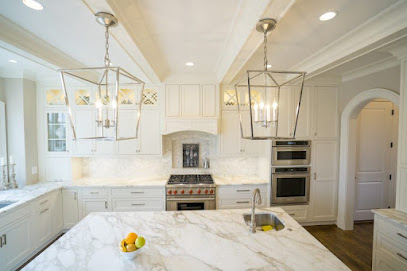
Quartz agglomerate is widely used in the decoration of premises, in particular - window sills, countertops, even steps for stairs are made of it. The versatility of application and high-performance characteristics have made this material, especially popular in private construction.
Natural stone is most often understood as products made of granite or marble - that is, these are processed mineral materials without the addition of polymeric components. This is in the full sense of a stone – as it is in nature.
In the decoration, natural stone has been used for a long time - steps, countertops, window sills and other interior elements are also made of it. The stone is resistant and practical in application, but many today prefer countertops made of quartz agglomerate. In general, agglomerate confidently bypasses the stone in popularity. Why? Let's take a closer look at the advantages and disadvantages of each material.

Properties of artificial stone
By artificial stone, we mean a composite material created in the factory. In this article, we will dwell in detail on quartz agglomerate, although there are still acrylic and polyester stone. We'll talk about them separately later. Quartz agglomerate or quartz does not have the disadvantages that a natural counterpart has. But he retains all the positive characteristics in himself. This is the main feature and the main advantage of using it for interior decoration. More and more manufacturing plants are starting to manufacture slabs of quartz, which leads to a gradual decrease in the price of this popular material. However, it is quite hard, so it cannot be processed at home or in artisanal conditions. Only in the workshop, or in the factory with the help of special diamond milling cutters with water cooling. Creating a quartz product with your own hands is impossible. This nuance can be attributed to its disadvantages. But at the same time, this is also its plus, since it is almost impossible to split or scratch it at home. So hard is the quartz slab.
Both quartz agglomerate and acrylic stone have everything that is most appreciated by consumers who choose artificial stone for their window sills, bar counters, tables and countertops:
- durability;
- strength;
- hygiene and environmental safety;
- relative heat resistance (with short-term exposure to high temperatures);
- resistance to damage;
- immunity to the action of household chemicals;
- simplicity in daily care;
- a large selection of decors and colours.

Advantages of quartz agglomerate
- Solidity. According to the Mohs Scale, the hardness of the agglomerate is 7, exactly the same indicator for granite. Quartz is one of the hardest materials on earth, so the countertop made of agglomerate does not scratch, it easily tolerates direct physical impact - you can cook directly on it.
- Hygienic. An important feature of the agglomerate is that, unlike natural stone, it does not prick and is not prone to the formation of microcracks due to polyester resin in the composition. This means that the formation of molds and fungi is impossible on it.
- Security. Many do not know this, but almost all natural mineral materials, formed over hundreds of thousands of years, accumulate background radiation. Unlike granite and marble, quartz agglomerate is radiologically neutral.
- Heat resistance. In this case, a countertop made of quartz agglomerate will not yield to a countertop made of natural stone - you can spill boiling water on it, you can put hot objects. The surface is resistant to high temperatures, including constant exposure to the sun.
- Moisture resistance. Quartz is absolutely non-hygroscopic, and due to the use of the already mentioned polyester resins, agglomerate even surpasses natural stone in this parameter - its moisture permeability index is up to 0.1%.
WHY IS AN ARTIFICIAL STONE COUNTERTOP EXPENSIVE?
Choosing a working surface for the kitchen is a crucial moment, because, firstly, you will have to live with it for more than one year, and secondly, it is quite an expensive pleasure. The choice of acrylic is a very serious occupation - here you can not be guided by the argument of a lower cost. Plasticity is one of its most important advantages. If you choose a cheap composite, then there is a high probability that it will be a composition of low quality, fragile and cracking. Material from well-known manufacturers in South Korea and the United States will be more expensive, but here it is better not to risk. But when choosing an agglomerate, you can be guided by the price, since the quality of the material itself, on average, is the same for all manufacturers. The fact is that the production lines themselves in all countries are the same, as well as the same composition of quartzite - only the percentage of natural stone differs. Depending on the manufacturer, these readings vary: 90-96% of the mineral, and the remaining 4-10% are binders and colouring pigments. Another question is that you need to know in advance whether the specified cost includes "turnkey delivery" since without experience it is unlikely that it will be possible to properly install the countertop.

Comments
Post a Comment